
Tanning
Why won't my legs tan? How to fix it on a sunbed
By Stuart · Co-owner of Beautano, 15 years in the tanning industry
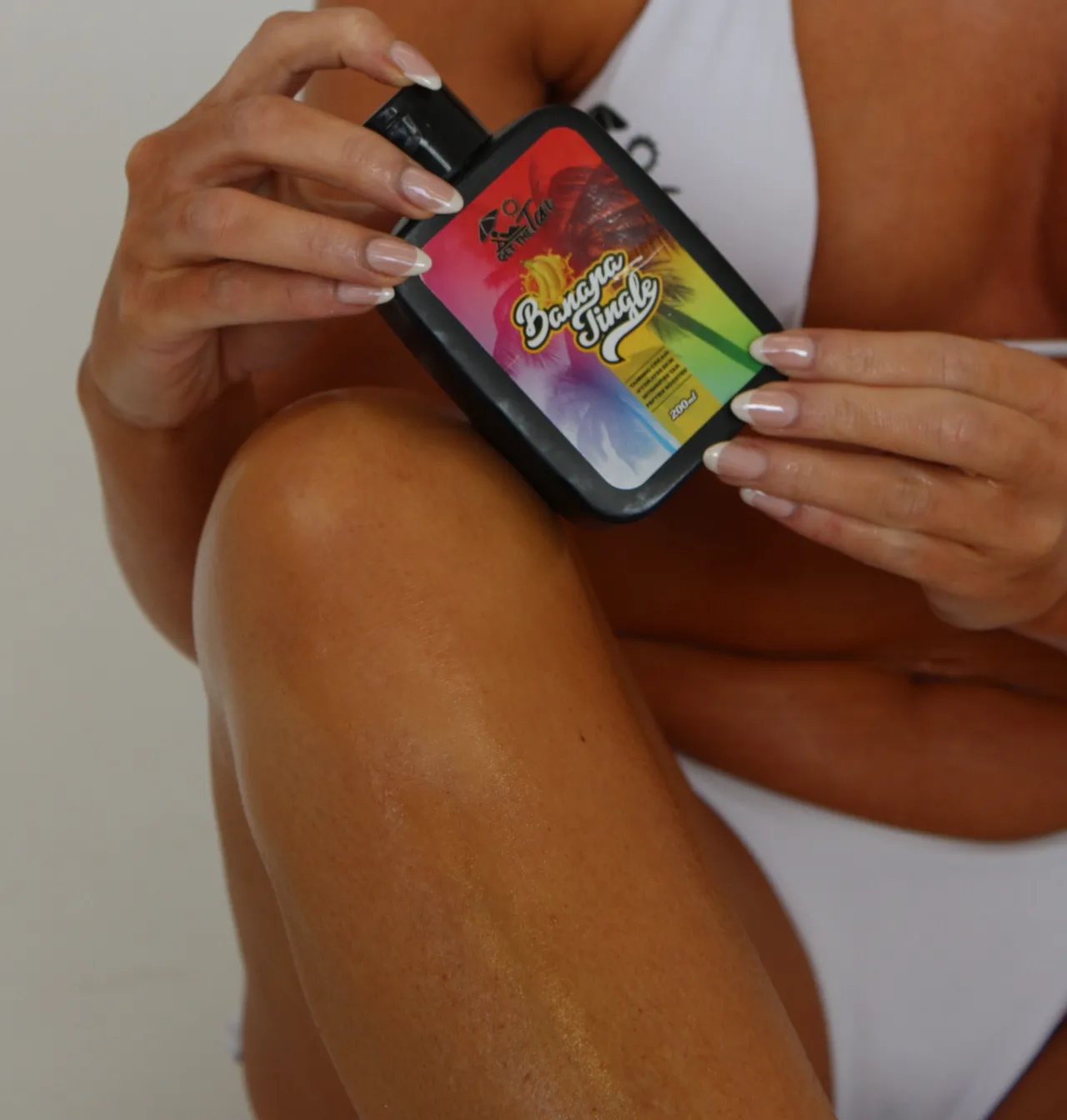
If your shoulders go golden while your legs stay pale, you are not doing anything wrong and the bed is not broken.
It is the question we get asked most on the Southside, usually around session three, when someone clocks their legs in the changing room mirror and wonders what the point was.
It is mostly dryness and shape, not melanin. Your lower legs have almost no oil glands, so they dry out and flake, and flaking takes your colour with it. They are also round, so most of the surface catches the lamps at an angle rather than straight on.
The fix: exfoliate the day before, moisturise every single day, keep your legs apart in the bed, and give it four to six sessions.
Why won’t my legs tan?
Five things stack up, and they are not equally important. Here they are in the order they actually matter.
| # | What’s happening | How much it matters |
|---|---|---|
| 1 | Lower legs have very few oil glands, so they dry out and flake | Biggest factor |
| 2 | Legs are round, so light hits most of the surface at an angle | Big, and fixable |
| 3 | Skin touching skin blocks the light completely | Big, and free to fix |
| 4 | Your legs spend the year covered up | Moderate |
| 5 | Lower limbs carry fewer pigment cells | Smaller than everyone claims |
1. Dry skin is the real villain
Oil glands are packed across your face, scalp, chest and upper back. On your lower legs they are sparse. That is why shins are the classic dry-skin spot, and why they go ashy in winter when nowhere else does.
Dry skin does two bad things. It scatters light instead of letting it through cleanly, and it flakes. Every flake that comes off takes pigmented cells with it, so you are losing colour between sessions as fast as you are building it.
Fix the dryness and most of the problem goes with it.
2. Round legs catch less light than a flat torso
The tubes run the full length of the bed, so your legs are getting lamp time. That is not the issue.
The issue is shape. Your chest and stomach are broad and fairly flat, so they face the lamps almost straight on and catch light across the whole surface. Your calves and thighs are cylinders. Only a narrow strip down the front of each leg faces the lamps directly, and the rest of the curve catches the same light at a steeper and steeper angle, which spreads it thinner across the skin.
Same bed, same minutes, less light landing on any given patch of leg.
Rolling your legs outward for part of the session, then back, presents a different strip of the curve to the lamps. Ten seconds of that cancels out most of reason number two.
3. Skin touching skin
Where your thighs press together or your calves rest against each other, no UV is reaching that skin at all. That is exactly where the pale strips down the inside of your legs come from.
4. Your legs start every year behind
Sun-exposed skin genuinely carries more pigment cells than covered skin. Measurements put the forehead at roughly three times the pigment-cell density of the abdomen, and that gap is built by years of daylight.
Your arms and face catch light all year without you thinking about it. Your legs spend a Scottish winter under jeans. You are not starting level.
5. Fewer pigment cells, but this is oversold
Here is where most articles on this subject overstate their case, so let us be straight about it.
It is true that pigment-cell density is lower on the lower limbs than on the upper body. The ranking runs face, then neck, then hip, then upper limbs, then lower limbs.
But research that measured both found that how deeply someone tans does not actually track their pigment-cell count. The two turned out to be independent. So while your legs do have fewer of these cells, it is not the neat explanation it gets presented as, and it is not the thing to fixate on.
The practical stuff above is what you can change. This one you cannot, and it matters less than you have been told.
The fix, in the order that works
- Exfoliate 24 hours before, not on the day
- Moisturise every day, not just after a session
- Use more lotion below the knee than you think you need
- Leave a gap at the knees and ankles
- Roll your legs outward and back once mid-session
- Shave the night before, wax 24 to 48 hours before
- Shorter sessions, more often beats one long blast
Exfoliate the day before
Dead skin sits unevenly, so colour lands unevenly on top of it. A scrub clears that layer.
Do it around 24 hours ahead rather than on the day. Freshly scrubbed skin is a little sensitised, and a day to settle means you get the benefit without the blotchiness.
Moisturise daily, not just on tanning days
For legs specifically this is the one that matters most, and it is the one everyone skips.
Hydrated skin holds colour. Dry skin flakes it away. Twice a week does not keep up with how fast shins dry out. Daily does, and you will see it inside a fortnight.
Know what you are actually buying
Lotions get marketed confusingly, so here is the plain version.
Accelerator or maximiser has no colour in it. It hydrates and helps your skin do its own thing. This is what you want for building a base.
Bronzer contains DHA, which develops a temporary colour on the surface over a few hours. Genuinely useful before an event, but it washes off and it is doing something different from a real tan.
Tingle increases blood flow to the surface and produces a hot, prickly, red reaction. Some people love it, plenty hate it. Do not make your legs the first place you try one, and never put it near your face.
Time your hair removal properly
Shaving takes a fine layer of skin off with the hair, so doing it on your way in leaves legs irritated and patchy. The night before works far better.
Waxing needs a wider gap. Leave 24 to 48 hours, because freshly waxed skin is more sensitive to UV.
Session three is when the gap between your top half and your legs looks its worst, because your upper body has raced ahead. It is also, almost exactly, when people decide it is not working and stop. Push on to five or six and it evens out.
Look after them afterwards
Moisturise while your skin is still slightly warm, because it absorbs better then.
Leave the scrub alone for a day. Exfoliating straight after strips the surface you have just worked on.
Skip the scalding shower. Very hot water dries skin out, which is the whole problem you are trying to solve.
How long it actually takes
Four to six sessions before your legs stop looking obviously lighter than your upper half. Longer if you are starting from a Scottish winter.
That is normal. It is not a sign the bed is not working or that you have wasted your money.
If you have a holiday coming up, start earlier than you think you need to rather than cramming it into the week before.
What your skin type has to do with it
Skin type sets the pace, which is why there is no single answer to how long you should be in for.
Fair skin that burns easily needs shorter sessions with proper rest days. Trying to match a friend with olive skin is how people end up burnt, and burnt legs peel and lose everything.
If you tan readily you have more room to work with, but the leg lag still applies to you.
We do a skin assessment on your first visit and set your times from it. That is not an upsell, it is how we avoid burning you in week one.
Which bed suits legs best
This is where the room you pick genuinely matters.
If pale legs are your main problem, try a stand-up. On the Hapro Luxura V8 you are upright with lamps all the way around you, so every side of your legs gets its turn instead of just the front. That takes the sting out of reasons two and three at once.
For a lie-down, the megaSun K11 Air Select is the one people travel across Glasgow for. It is climate controlled, and being comfortable means you stay still for the full session instead of fidgeting and shading half of yourself.
Full line-up and room prices are on our prices page.
A sensible word on safety
Sunbeds are for over 18s only. That is the law in Scotland, not a house rule.
If you burn easily, have a lot of moles, or take medication that affects light sensitivity, speak to us before you book rather than guessing.
Common questions
Why are my legs so much lighter than my arms? Mostly dryness, plus they are round so the light spreads thinner across the curve, and they spend the year covered. Fewer pigment cells plays a part, but a smaller one than usually claimed.
Will more minutes fix it faster? No, and it raises your burn risk. Preparation moves the needle more than duration.
Should I shave before or after a sunbed? The night before. If you wax, leave 24 to 48 hours.
Do tanning lotions actually work? Accelerators help your skin stay hydrated and respond, which is real. Bronzers add temporary surface colour that washes off. Two different things.
Is a stand-up better than a lie-down for legs? For legs specifically, often yes. You are surrounded by lamps rather than lying under them, so the sides and backs of your legs get their share instead of only the front. Plenty of people alternate between the two.
How often should I come in? Depends on your skin type. Rest days between sessions are standard, and we will work out a sensible run at your first visit.
Come and get it sorted
We are on the Southside in Nitshill, open seven days, five rooms including the K11 Air Select.
If your legs have been letting you down, come in and we will sort a routine that suits your skin.
Book a session or drop in for a chat first.